

Discover & define
We review your product, hardware, users, and priorities, then agree on the app scope and integration requirements.
iOS APP DEVELOPMENT FOR CONNECTED PRODUCTS
Custom IoT app development for smart homes, wearables, energy systems, and connected equipment. We turn your hardware into a native iPhone experience. Try what we can build.
Your hardware. Our iOS expertise. One connected experience.
Discuss your iOS app Explore our services
Ready for your first connection.
 HOME
HOMEINTERACTIVE PRODUCT PREVIEW
A tap brings your app and home onto the same network.
INTERACTIVE PREVIEW · ILLUSTRATIVE DATA
Interactive app concepts. Tap the controls or scroll to see each device respond.
Native to iOS.
Built around your product.
SOFTWARE FOR YOUR CONNECTED PRODUCT
Looking for an IoT app development company? Explore the software we build, the integrations your product needs, and what to share to start a project.
Custom Bluetooth BLE app development for iPhone and iPad. Device pairing, GATT integration, sensor data, controls, and reconnect flows for your product.
Explore the service 02 / DEVELOPMENTBuild a custom smart home iOS app for connected lights, climate controls, sensors, and appliances. Device onboarding, scenes, alerts, and cloud integration.
Explore the service 03 / DEVELOPMENTDevelop the software behind your IoT product: native iOS apps, device integration, cloud APIs, dashboards, and an MVP scope built around real hardware.
Explore the serviceYOUR iOS DEVELOPMENT PARTNER
We bring product design, native iOS engineering, and device integration together. One partner for the software your product needs.
Tell us about your appWe shape the app around your users: clear onboarding, familiar iOS interactions, and controls that make sense from the first tap.
We develop your app in Swift and SwiftUI, connecting the interface to the device behavior, permissions, and everyday workflows your customers depend on.
Bring device data, user accounts, and remote actions together with the APIs, cloud services, and management tools your product needs.
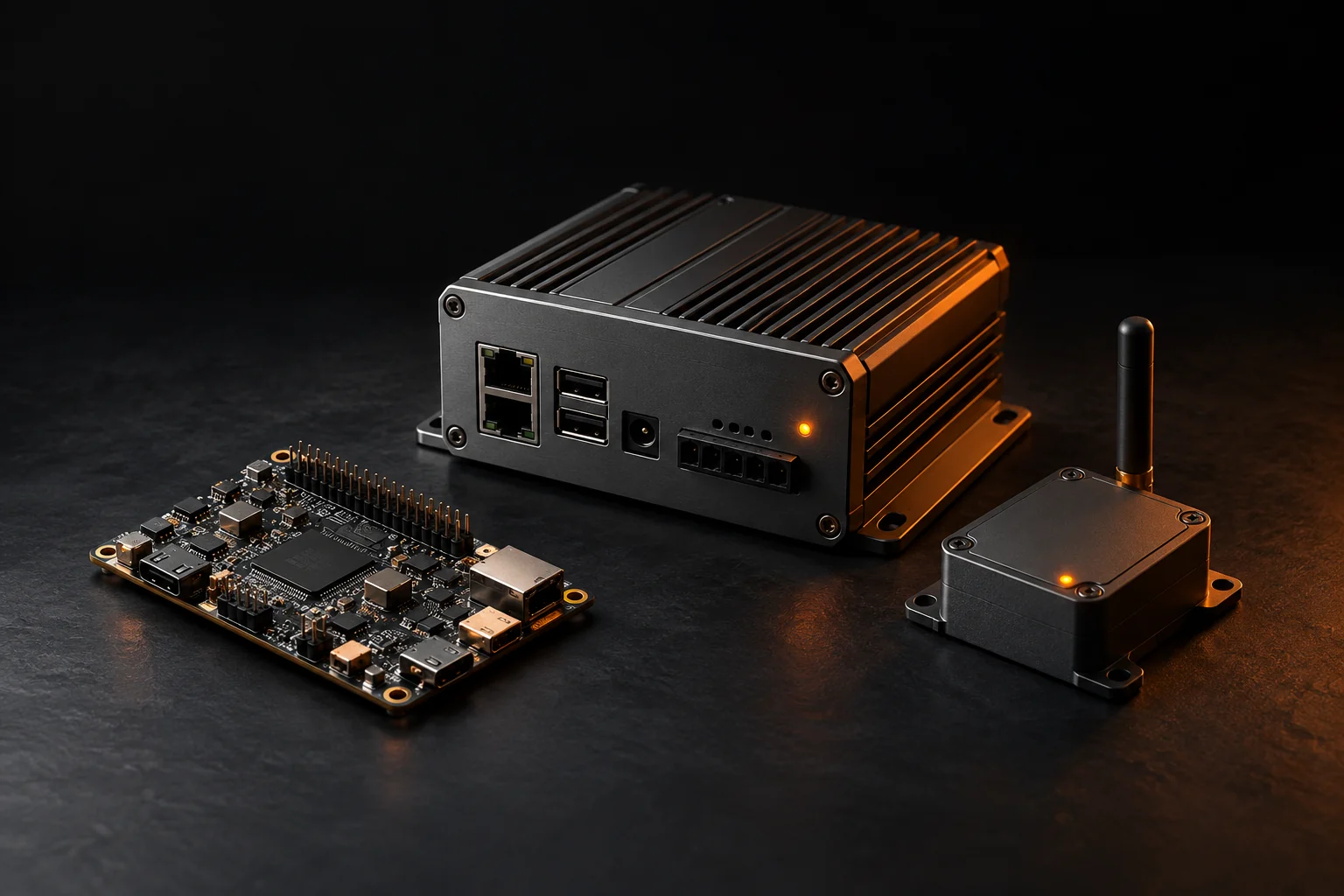
iPHONE MEETS IoT
Your device brings the capability. We build the iOS experience around it: discovery, pairing, controls, data, and reliable reconnection.
Explore eight connected-app ideas we can build for iOS. Each starts with your hardware and the people who use it.
Give customers one iPhone app for lighting, climate, sensors, and remote controls. Build an experience that makes your hardware easier to use.
Designed around your hardware and its capabilities.
Help operators see equipment conditions, review historical trends, and act on alerts from an iPhone or iPad monitoring app.
Integration depends on available protocols and data access.
Connect your consumer device to a polished native iOS experience—from first-time setup to everyday controls and device settings.
Built for your device protocol and the way people use it.
Bring supported tracker and sensor data into one iOS app, helping your team understand asset location, condition, and recent activity.
Location accuracy and update frequency depend on hardware.
Build an iOS companion for your fitness wearable or connected training device. Help customers pair their device, track sessions, and see their progress on iPhone.
Features depend on your device data and supported integrations.
Create an iOS app for growers using connected soil sensors, weather stations, or irrigation controllers. Bring field conditions and supported controls into one practical workspace.
Remote actions depend on controller support and field connectivity.
Give customers an iPhone app for their connected energy system. Bring supported meter, solar, battery, or EV-charger data into a clear view of usage and device status.
Available data and controls depend on manufacturer APIs and hardware.
Build an iOS app for teams moving temperature-sensitive goods. Connect supported loggers and sensors to shipment records, condition history, and alerts.
Alert timing depends on sensor sampling and connectivity.
iOS FOR SMART HOME PRODUCTS
Smart home technology has developed gradually as everyday devices became capable of connecting to the internet and sharing data through the Internet of Things (IoT). That connection has changed how people interact with their homes.
Appliances, lighting, heating, and security systems can now be managed through a single connected environment. Beyond convenience, home automation can help manage energy use, improve awareness of security events, and adapt the home to its occupants’ daily routines.
From automated lighting to remote monitoring, people experience IoT through the practical problems it solves.
Smart lighting reduces the need for constant manual control. Lights can turn on or off depending on occupancy, time of day, or available natural light. The home adapts to daily routines while helping reduce unnecessary electricity use.
IoT systems make temperature and indoor climate management more predictable and convenient. Heating and air conditioning can maintain comfortable conditions automatically, taking schedules, occupancy, and external factors into account, so homeowners need fewer manual adjustments throughout the day.
Smart cameras, locks, and sensors let homeowners monitor what is happening inside and around the house. When unusual activity is detected, connected systems can send a notification so homeowners can respond, even when they are away.
IoT gives homeowners a clearer picture of how and when energy is used. Automation can reduce consumption during low-activity periods, turn off unused devices, and coordinate key systems, supporting households that want to lower costs and improve energy efficiency.
Check device status, change settings, and receive alerts from wherever there is a supported connection. Remote access makes home management more flexible, particularly for frequent travelers and people managing multiple properties.
Bring us your product and the experience you want your customers to have.
A clear scope, a thoughtful interface, and real-device testing. We work through the details that make an app ready for everyday use.
Start the conversationWe review your product, hardware, users, and priorities, then agree on the app scope and integration requirements.
We map the user journey, prototype the interface, and prove critical device connections before the full build.
We develop the iOS app and supporting services, testing on real devices and hardware across everyday conditions.
We prepare the release, support the App Store submission, and plan improvements as your product grows.
Yes. We build custom iPhone and iPad applications with Swift, SwiftUI, and UIKit. The implementation is chosen around your product, device integrations, and supported iOS versions.
Yes. Share your device model, firmware documentation, available Bluetooth or Wi-Fi protocols, and access to test hardware. We review the integration and validate the critical connection before expanding the app.
Yes. We can work alongside your engineers to align device commands, API contracts, setup flows, data formats, and error handling.
Yes. A focused prototype can validate device pairing, data exchange, or a key app interaction before you commit to the full product.
We can plan a native Android or Flutter companion alongside the iOS product, depending on your platform requirements and device features.
A new product, an existing device, or an app that needs a better experience. Tell us what you have in mind.